

Pet Dental Health

Dental health is just as important for our pets as it is for us. However, studies show that as many as 1 in 8 dogs have dental disease, and this figure is even higher in cats. This can have a huge impact on their quality of life, as well as putting them at risk of other health issues. We know that keeping on top of your pet’s oral hygiene can be tricky, but we’re here to support you.
In this blog, we’re going to take a look at dental disease in more detail, covering your most asked questions as well as some practical tips on how you can help manage your pet’s oral care.
What is dental disease?
Dental disease, also known as periodontal disease, is a common condition in pets. It often starts with plaque build-up – a slimy layer of bacteria, saliva, and food particles that coats your pet’s teeth. This can mineralise over time and harden into tartar, a grey-brown substance covering the normal, shiny white tooth enamel. The bacteria in this tartar and plaque create gum inflammation, known as gingivitis. If this is left untreated, the disease could progress further to periodontitis, where the bone and ligaments supporting the teeth become damaged. This will lead to tooth loosening and tooth loss. Dental abscesses can also occur secondary to dental disease or tooth fractures, leading to painful facial swelling.
In cats, we also frequently see feline resorptive lesions (FRLs). These appear as a small hole in the tooth enamel, usually found at the gum line or just below it. Erosion of the enamel can lead to exposure of the sensitive tooth pulp, causing pain. In some cases, the crown of the tooth may break off, leaving behind root material in the jaw.
Cats are also prone to feline chronic gingivostomatitis (FCGS), a condition that causes inflammation of other areas of the mouth as well as the gums, due to an overreaction from the cat’s immune system to oral bacteria. This may be related to persistent viral infections, but the exact cause is often unknown.
What causes dental disease?
There are several reasons why your pet may develop dental disease. These include:
- Tooth alignment – overcrowded teeth can be trickier to keep clean and are more likely to trap food. Overcrowding is a very common issue in brachycephalic (flat-faced) breeds like bulldogs, pugs, Persians, and British shorthairs. Retained deciduous (milk) teeth can also cause issues for some pets.
- Lack of at-home oral care
- Infectious diseases
- Genetics – some animals seem more prone to dental disease than others.
- Diet – nutrition can affect oral health.
- Trauma
- Advancing age – we see more dental disease in older patients.
What are the signs of dental disease?
There are several indications that your pet might have dental disease, including:
- Grey-brown tartar building up on the teeth
- Red, inflamed gums that may bleed easily
- Loose, missing, or broken teeth
- Halitosis (bad breath)
- Increased drooling
- Pawing or rubbing at the face
- Changes in eating habits, such as reduced appetite, eating more slowly, avoiding hard chews, or dropping food when eating
- Reduced grooming
- Reacting when having their mouth examined or handled
- Changes in behaviour, such as irritability or becoming withdrawn
- Weight loss
It is important to note that both cats and dogs are very good at hiding signs of pain. That is why regularly checking your pet’s mouth at home and attending routine vet appointments is crucial.
Why is it important to treat dental disease?
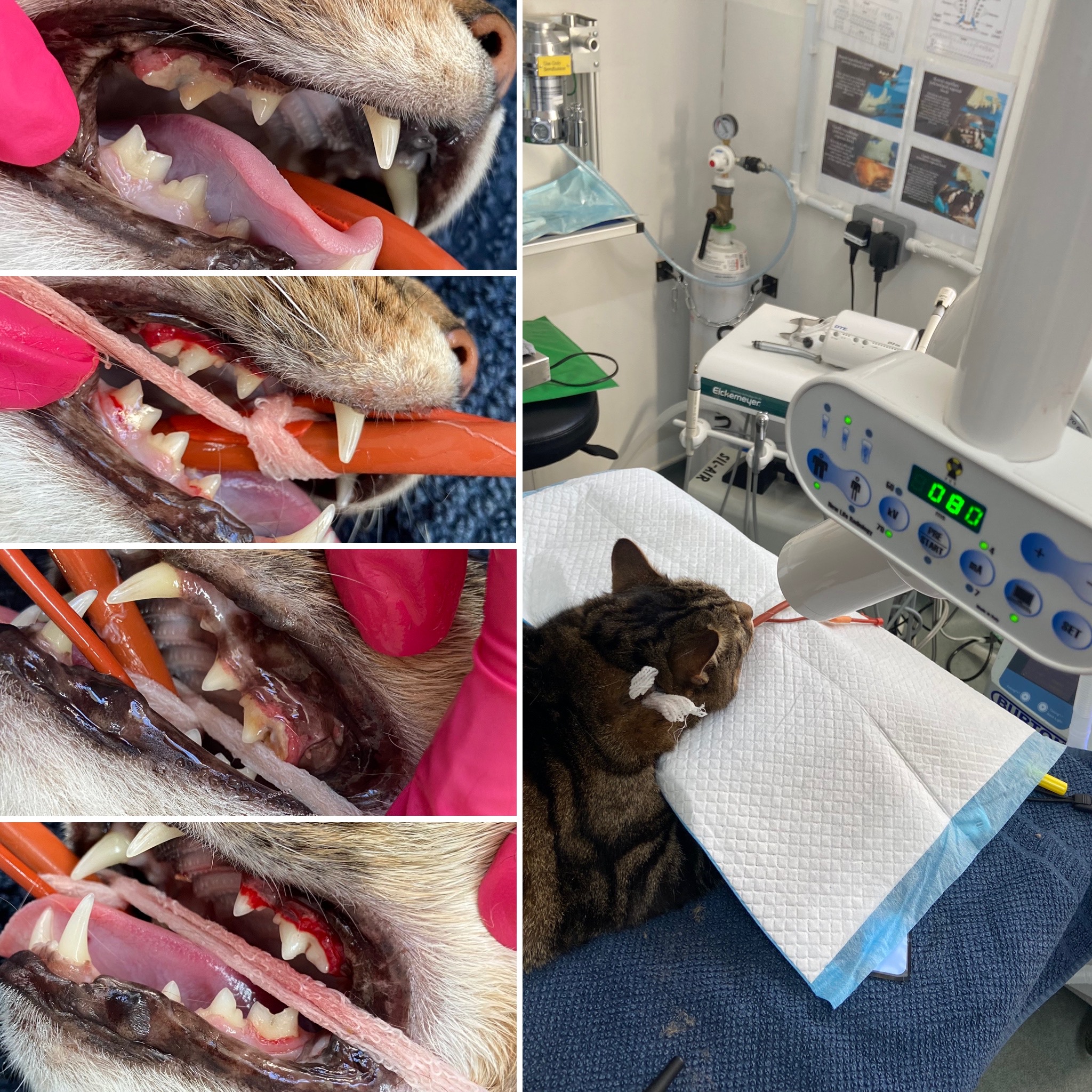
Painful, diseased teeth can have a real impact on the quality of life of our pets. Animals are not very good at showing they are in pain, so lots of these pets will still eat and go for walks, despite having a very sore mouth.
As well as causing issues in the mouth, dental disease can have wider-ranging effects on the body. Bacteria can enter the bloodstream through inflamed gums and end up at other sites. This can cause secondary problems in places like the heart, kidneys, and liver.
How is dental disease treated?
If an examination by one of our team members confirms your pet has dental disease, then advice will be given on further at-home oral care techniques, or a dental procedure may be recommended.
If your pet needs to come into the practice for dental treatment, then this will usually involve the following:
- A general anaesthetic – your pet will need to be anaesthetised for a more detailed examination and for us to be able to carry out treatment effectively. We can offer pre-anaesthetic blood tests and can support your pet’s blood pressure with intravenous fluids during their surgery, as well as continuously monitoring them while they are asleep. We know it can be worrying for pet owners, but it is not uncommon for us to anaesthetise senior animals. In fact, many of our patients requiring dental treatment are older pets! Our team is always happy to discuss anaesthetic benefits and risks with you further.
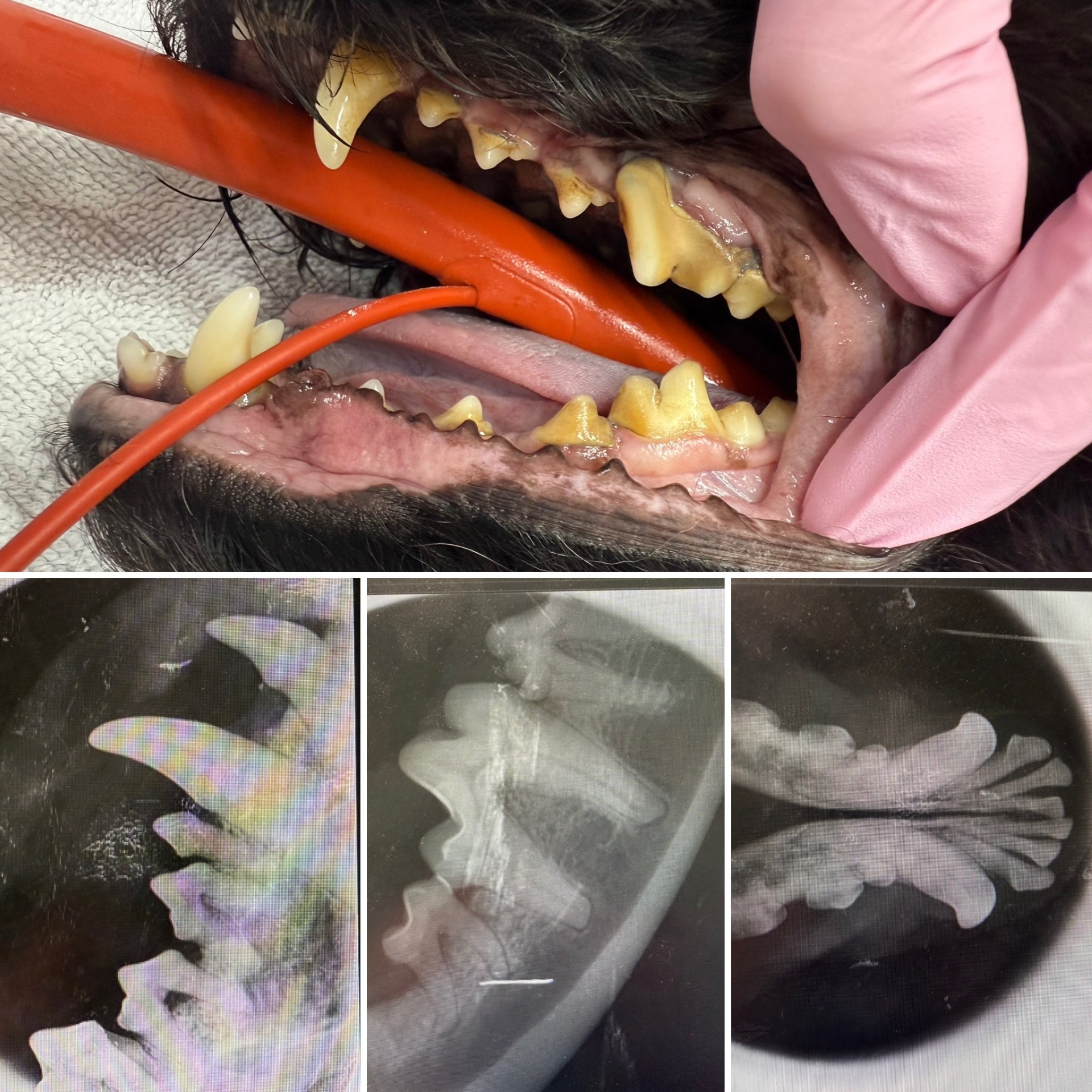
- Examination – A detailed examination of your pet’s mouth can be performed while they are asleep. This will allow us to assess for issues like gum recession, stomatitis, lumps, and tooth abnormalities. The examination may also include taking dental radiographs (X-rays) to assess below structures below the gum line, like the tooth roots and jawbone.
- Professional cleaning – we will remove tartar and plaque from your pet’s teeth. This procedure can be stressful and uncomfortable – as well as ineffective at reaching the problem areas below the gum line – in conscious patients, but anaesthetising pets allows us to do a thorough and professional clean. Conscious teeth cleaning procedures are not recommended on animal welfare and effectiveness grounds.
- Dental extractions – Depending on examination findings, your pet may require tooth extractions. This is performed to remove painful or diseased teeth that cannot be salvaged. Some pets may need multiple extractions, whereas others may just have one or two problem teeth.
- Advanced dental treatments – Sometimes, advanced dental treatments are needed, especially if your pet has had a traumatic injury, like a crown fracture or a broken jaw. In some cases, you may need to be referred to a vet who specialises in dentistry.
Our team will discuss their findings and recommended treatments with you.
How can I prevent dental disease in my pet?
At-home oral care is an important part of keeping your pet’s teeth clean.
Daily teeth brushing
Daily teeth brushing is the number one thing you can do to look after your pet’s teeth. Training should begin early, but it’s never too late in life to start. Don’t expect your pet to accept a toothbrush straight away. You will need to do some gradual positive association training, which could take several weeks depending on your pet’s personality and previous experiences. Tooth brushing is recommended for cats as well as dogs.
Start off by rewarding your pet for having their face and mouth touched. When your pet is happy with this, you can progress to a brush, use a small child’s toothbrush, or one designed for pets. Don’t use human toothpaste, as this can be toxic or painful to pets; always use one designed for pets. Start by brushing just one or two teeth at a time, rewarding your pet as you go along. Eventually, you will be able to progress to a full mouth cleaning each day.
Remember to keep training sessions short and go back a step or two if your pet is not comfortable. The slower and more patient you are, the better your chances of success. Speak to us if you are struggling.
Dental diets and treats
While nothing beats regular teeth brushing, some dental chews have been proven to improve oral hygiene, although they are often very high in calories. There are diets formulated specifically to help prevent tartar buildup as well. Bones, antlers, and other hard chew items are not recommended, as they can cause painful dental fractures. As a rule, don’t give your pet anything that is too hard to dent with your fingernail.
Chew toys
Chew toys can be useful for dogs to help massage gums and reduce plaque and tartar build up. Chewing has been proven to have a positive impact on their oral microbiome. Again, don’t give your pet anything too hard, and check toys regularly for wear and tear.
Water additives and supplements
Water additives and other supplements are available which can help to maintain oral health in pets. These can be a useful aid alongside other measures like tooth brushing. Speak to us for recommendations.
As well as regular oral care at home, it is important to attend regular vet checks. Our team will be able to advise you on your pet’s oral health and make recommendations for your at-home regime. We will also be able to spot developing issues and book your pet in for a dental procedure, if required.
A note on small furries
It’s not just cats and dogs that are affected by dental disease! We see many rabbits and guinea pigs with dental problems, as well as other species. For these animals, overgrown teeth and malalignment issues are common, often due to a poor diet or genetics/breeding.
It is therefore important to keep an eye on your pet’s behaviour, looking for issues like appetite changes or weight loss. Facial swellings or overlong incisors (front teeth) are also clear signs that there is a problem. Make sure to bring your small furry in for an urgent appointment if you notice anything unusual.
Summary
Oral care in pets can easily be overlooked, but it has a significant impact on their health and well-being. By being proactive, attending regular vet checks, and building oral hygiene into your daily routine, it is possible to reduce the risk of your pet developing dental disease.
We are here to support you with this, so if you have any concerns about your pet’s oral care or you have noticed something abnormal, then contact us for an appointment on 0131 287 2662.